Sheet 00/08 — Title
Applied AI androbotics engineering.
We build production artificial intelligence systems and robotics from the north Cornish coast — for organisations entering the field, and for those already in it who need to go further than their present capability allows.
Sectors delivered
SevenRange
Fieldbus → foundation modelsClients
Government · research · industryThe constraint is no longer capability.
Foundation models are, for a wide class of bounded tasks, good enough. Robotics hardware that cost six figures a decade ago is now a fraction of that. What has not kept pace is everything around them.
Detail A
Integration
Most programmes fail because nobody owned the connection into the systems of record — the registry, the property management system, the dealer system, the ledger. That is engineering work, and we treat it as first-class.
Detail B
Assurance
An organisation deploying AI will be asked to prove it behaves as claimed — by an auditor, a regulator, an insurer or a court. Systems that cannot answer that are liabilities regardless of how well they perform.
Detail C
Regulation
The intended product is sometimes prohibited in the target jurisdiction. We establish that before anything is designed, rather than after a factory has been paid.
Client register.
Companies whose artificial intelligence and robotics we built. Each entry is a system in production and, in most cases, a published whitepaper you can read instead of taking our word for it.
 FarmHQOffline-first compliance platform, statutory registry filing, and the aerial robotics programmefarmhq.ai ↗QR-02
 QuanMed AIDomain language model, clinical decision support architecture and patient-controlled data custodyquanmed.ai ↗QR-03
 XFoneReal-time voice stack under 800 ms median, grounded responses, dealer management integrationxfone.ai ↗QR-04
 Sleepless TradesmanReasoning layer, computer vision for site photography, and persistent memory architecturesleeplesstradesman.com ↗QR-05
 GuestAIRetrieval-grounded concierge, multi-tenant isolation at the database, PMS adapter layerguestai.co.uk ↗QR-06
 BlockAIAutomated market making across 120+ exchanges, cross-chain settlement, on-chain escrowblockmm.ai ↗QR-07
 Robot AutoTraderRobotics market analysis and the marketplace platform behind itrobotautotrader.com ↗
 ChainAIPlatform engineering and marketing automationFinance · Marketing
We tell clients what will not work.
The most valuable thing we produced on one robotics programme was the finding that the client’s intended product could not lawfully be sold.
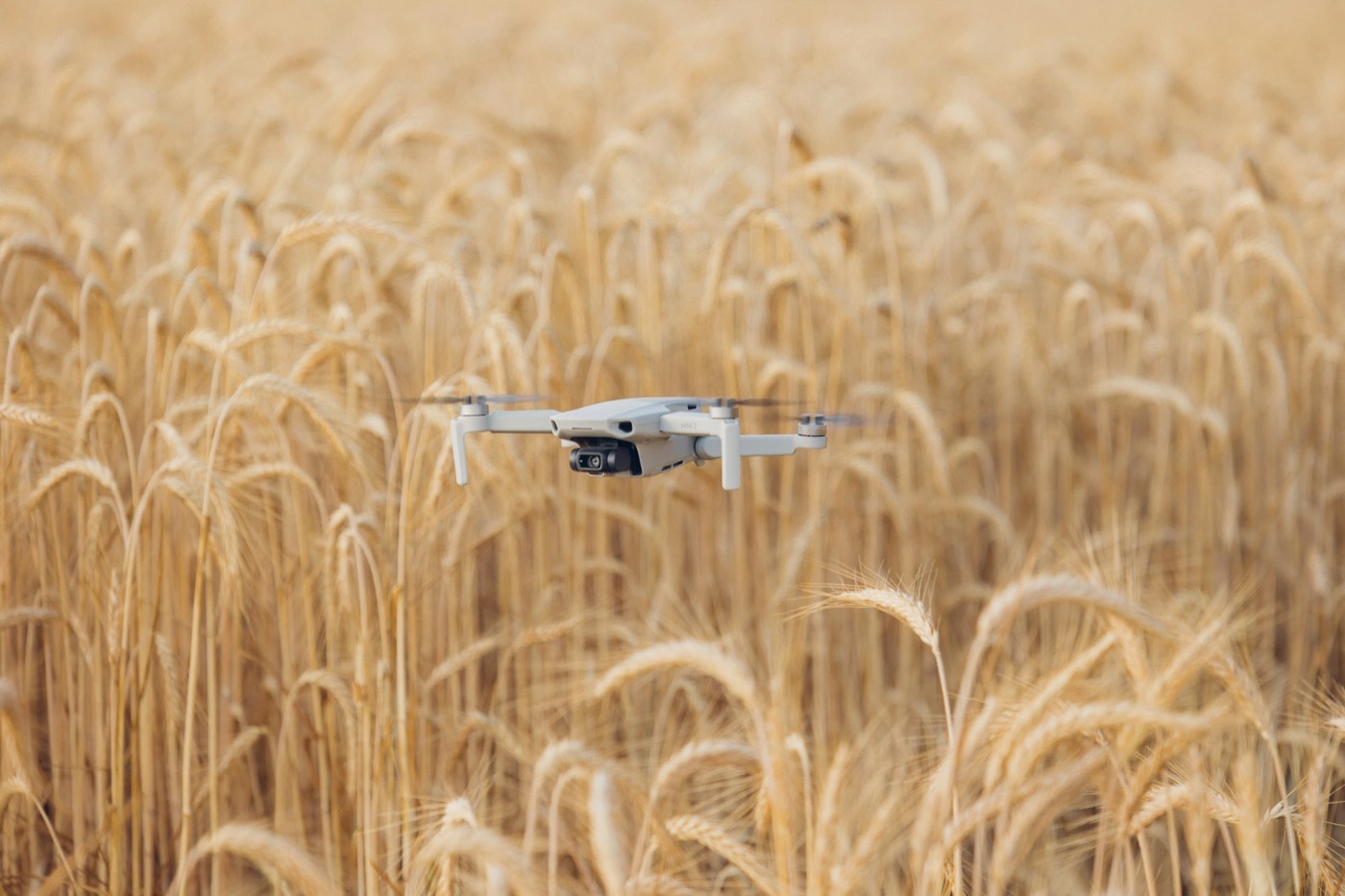
Case annotation — aerial programme
A client came to us wanting a crop-spraying drone. Our regulatory research established that applying pesticide from the air in the United Kingdom requires a permit from the Health and Safety Executive, and that only trial permits have ever been issued. The obvious product was being sold into a commercial market that did not legally exist. A spray platform also exceeds 25 kg, placing the operator in the Civil Aviation Authority’s Specific Category.
They did not buy a spray drone. They built a software product for aircraft their customers already owned, and reached revenue without a factory. We would rather deliver that finding in week three than a working prototype in month eighteen.
Capability schedule.
Most failures in applied AI and robotics happen at the seams between disciplines. Seams are easier to engineer away than to coordinate across, which is why our vertical range is deliberate.
Applied AI systems
Retrieval-grounded assistants, document and vision pipelines, real-time voice agents, agentic workflows with constrained tool use, and the evaluation harnesses to measure all of it.
Robotics & autonomy
Aerial systems and mission software, CANopen fieldbus and motion control, perception and sensor fusion, teleoperation, and the regulatory analysis that determines what may lawfully be operated.
Platform engineering
Multi-tenant SaaS, offline-first mobile, web platforms and APIs — the substrate AI features have to live on if they are to be used by more than one person.
Data & compliance
Integration into systems of record, data residency, tenant isolation, audit logging, and the evidence trail a regulator will ask for.
Research partnership
Study design, ethics and IRB documentation, dataset construction, model evaluation against clinical endpoints, and honest reporting of what results do and do not support.
Brand & communication
Identity systems, design languages and the public artefacts — whitepapers, guidelines, product sites — that determine whether serious work is taken seriously.
Seven industries. The techniques transfer.
Offline-first synchronisation built for a field in Cornwall works in a plant room in Dubai. The confirmation loop that keeps a statutory livestock filing safe is the pattern that keeps a clinical suggestion safe.
Where a wrong answer is not a bug report
Diagnostic and predictive modelling from clinical imaging, research-grade data architecture with patient-controlled custody, clinical decision support positioned as augmentative, and the ethics documentation that lets a study proceed. We work to research standards for dataset provenance, reproducible pipelines and reporting that separates what the data supports from what the authors hope.
Built to survive scrutiny.
For government, healthcare and research clients this is frequently what decides the engagement, so we state our position plainly.
The determinism boundary
Every system has a documented line between what is probabilistic and what is not. Compliance rules, statutory calculations, withdrawal periods and tax arithmetic are implemented deterministically. A model may draft across that line. It does not compute across it.
The AI drafts, a human confirms
Nothing we build submits to a government registry, files a statutory return, dispatches funds or commits a clinical decision on its own initiative. The model prepares, a named human approves, the approval is logged.
Client data is not used to train models
Not ours, not a vendor's. Where a commercial inference provider is used we contract for zero-retention and no-training terms, and record it in the client's data protection documentation.
Residency enforced at every layer
Where a client requires UK-only or EU-only processing, that constraint propagates to model inference too. We do not make an exception for the AI. Tenant isolation is enforced at the database, not only in application code.
Why a robotics company is on the Atlantic Highway.
We are based at Atlantic Highway Services in Bude, on the A39 where it runs along the north Cornish coast. That is a deliberate choice, not an accident of where someone happened to live.

Fig. 07.2 — Coastal section, Celtic Sea to the plateau the practice sits on
Serious engineering does not have to be done in a capital city, and there is a case — for resilience, for cost, and for the health of regional economies — that some of it should not be. Cornwall has deep-water cable landings, a spaceport at Newquay forty miles down the coast, and a farming and marine economy that produces exactly the constraints our software is built for: poor connectivity, hard weather, statutory record-keeping, and no tolerance for a system that only works in a demonstration.
Offline-first is not an architectural preference we read about. It is what happens when you build for a farm three miles from the nearest usable signal, and then discover the same pattern is what a plant room, a hospital basement and a rural garage all needed too.
Latitude
50°49′36″NLongitude
004°32′38″WGrid ref
SS 2065 0634Coast
Celtic Sea · AtlanticRoad
A39 Atlantic HighwayPostcode
EX23 9JYRead before you call.
QR-WP-001
Capability whitepaper
What we build and how — engineering method, technology platform, robotics practice, assurance position, regulatory posture, named case studies and engagement models. Closes with a note identifying which claims rest on forecast rather than fact.
Read →QR-BG-001
Brand guidelines
The identity system: monogram construction geometry, logo usage and misuse, the palette with measured contrast ratios, typography, graphic language and application standards.
Read →Tell us what you are trying to do.
A conversation, then a short written assessment of what we think the real problem is — frequently not the problem as first described. We do not charge for that stage, and we would rather establish early that we are the wrong supplier than discover it at month four.
Contact us →